


Foundations Of English Prose
Publisher: G bell and Sons
Format: Paperback
ISBN: none
Foundations of English Prose (1931)
By A. C. Ward | G. Bell and Sons
ISBN: none (from when prose had foundations, not barcodes)
Condition: Good as sold by Crappy Old Books
This is Foundations of English Prose, a book from 1931, back when people sincerely believed that:
-
prose could be taught
-
standards could be maintained
-
and dangling participles were a sign of social decay.
A. C. Ward strides in like a one-man grammar restoration project, determined to rescue you from flabby sentences, vague adjectives and “style” that is really just noise.
What’s inside (besides fear and syntax)
You get the full traditional toolkit:
-
How sentences actually work – clauses, balance, rhythm, the difference between a sturdy line and a linguistic pancake.
-
Choice of words – plain vs. fancy, precise vs. woolly; also a quiet war against unnecessary jargon that feels remarkably modern.
-
Paragraph construction – topic sentences, logical flow, that magical art of not wandering off halfway through.
-
Examples from real writers – the kind who were considered safe and edifying in 1931, yet still manage to be annoyingly good on the page.
It’s not about expressing your deepest self through the power of vibes. It’s about writing clear, strong English that doesn’t fall over when pushed.
The tone: strict but secretly encouraging
Ward is very much your old-school English master:
-
Firm, articulate, slightly alarmed by the direction civilisation is taking
-
But actually on your side – he just wants your prose to stop embarrassing both of you.
Expect:
-
Short, sharp pronouncements like “This is bad” followed by “Here is how to do better.”
-
A refreshing lack of motivational padding.
-
The underlying assumption that you, dear reader, are perfectly capable of writing like an intelligent adult if someone just explains it properly.
It’s more boot camp than creative writing retreat, and that’s part of the charm.
This particular copy
From the photo and listing:
-
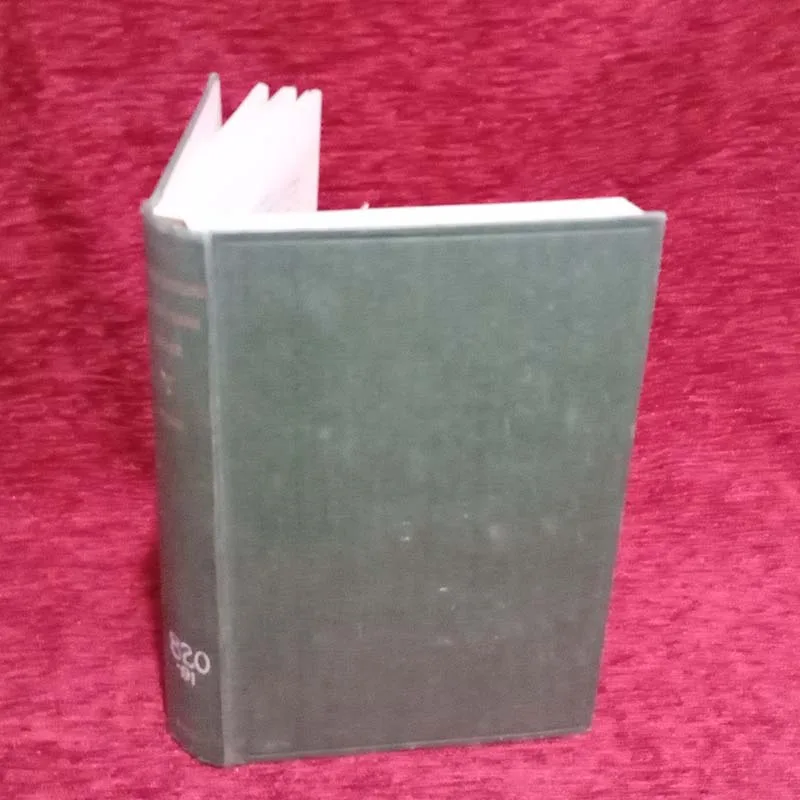
Condition: Good – which, for a 1931 hardback, is rather respectable:
-
Dark cloth boards, plainly utilitarian, radiating “textbook” energy.
-
Spine slightly rubbed, corners softened – the physical equivalent of a tweed jacket with worn elbows.
-
Pages all present, properly bound, likely tanned just enough to confirm authenticity.
-
There may be the odd pencil mark or faint ghost of previous study, but nothing that stops it doing its job: bullying your sentences into shape.
Why you might actually want this
-
You’re a writer, editor, teacher or stubborn pedant with a weakness for vintage style guides.
-
You enjoy seeing how prose was taught before the age of PowerPoint and “storytelling workshops.”
-
You suspect, deep down, that your sentences might be improved by a brisk 1930s talking-to.
-
You’re building a little shelf of books that quietly intimidate visiting writers.
It’s also a decent reality check: the problems Ward rants about in 1931 are exactly the ones we still have, just now with more emojis.
The vibe
Reading Foundations of English Prose feels like:
-
Sitting in a chilly classroom with tall windows while someone explains, with weary brilliance, why that paragraph you’re so proud of is actually a mess.
-
Realising that clarity and rhythm are not mystical talents but things you can work on, line by line.
-
Getting unexpectedly inspired to cut three words from every sentence you write, just to see what happens.
It’s the anti-fluff book. No inspirational quotes on creativity. Just “Here is how not to write like a turnip.”
Condition vs. Authority
-
Physically: Good – solid enough to be thrown into a bag, opened flat on a desk, or used to prop up a laptop while you rewrite.
-
Intellectually: still sharp; the language may be a tad old-fashioned, but the advice is depressingly evergreen.
Offered by Crappy Old Books, where the covers are plain, the condition is Good, and the prose foundations are ready to judge you—constructively—from a distance of nearly a century.
Keep browsing: See more Academic books Other books by AC Ward
